

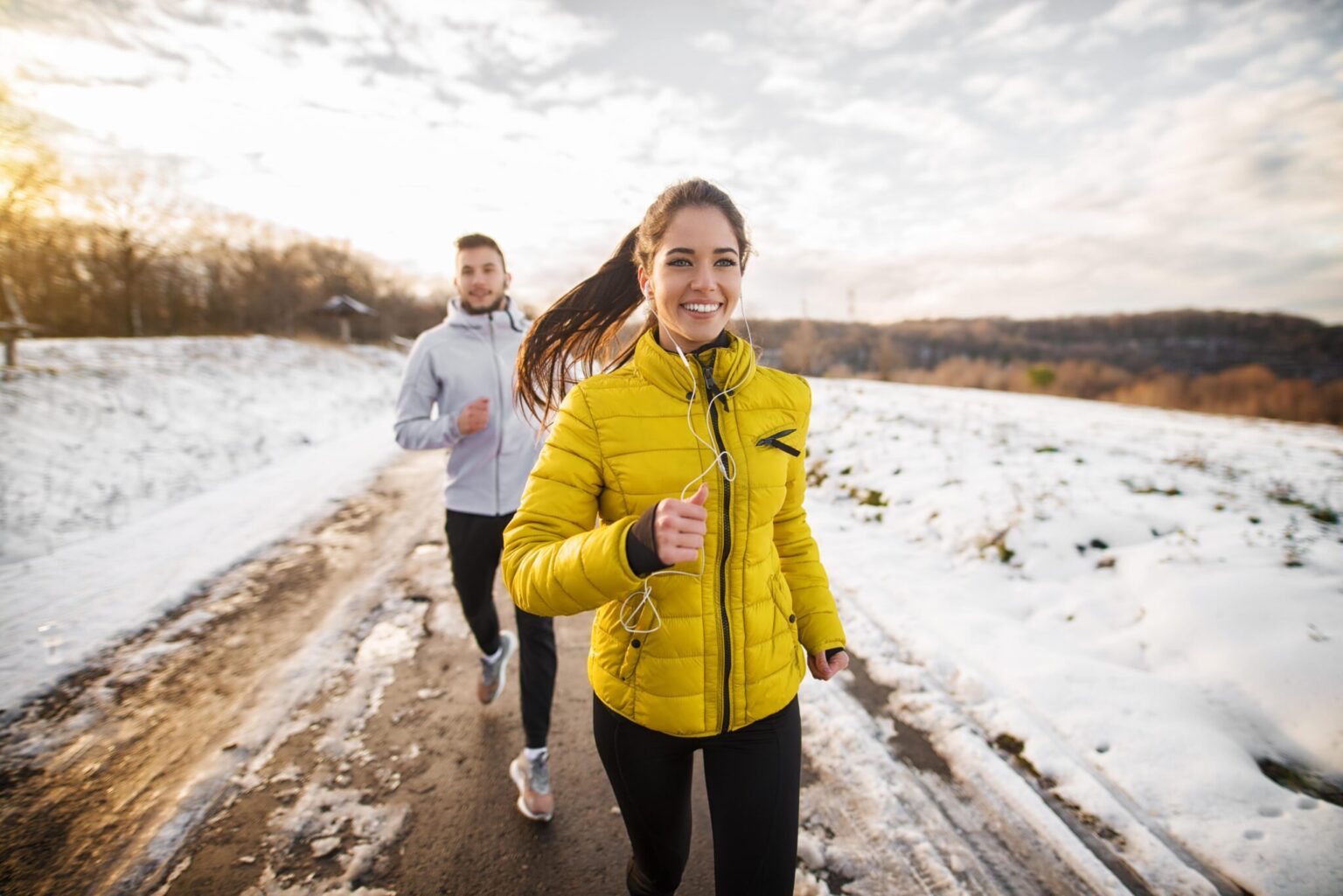
Regular movement and exercise are important to maintain all year round, even in winter. This will help you prevent unwanted weight gain and strengthen your physical fitness. However, exercising outdoors in winter is not always safe, so take a few minutes to read the following paragraphs and learn how to exercise safely.
How to start?
It is advisable to get used to the cold weather gradually, starting as early as autumn. Initially, it is important not to overdo it in terms of the duration, intensity, or frequency of your workouts. It is helpful to set a goal that will motivate you to exercise regularly. After all, in winter, when you come home from work and it is almost dark, you may not always feel like moving. While it is more than desirable to rest on some days, it is not ideal to stop exercising or moving altogether for the entire winter! For example, if your main goal is to lose weight and run 5 kilometers at once, start simply with walking. Gradually extend your route every day during the first week; the following week, try jogging in some sections; the week after that, try running half the way and walking the other half, until one day you manage to run the entire distance. Definitely do not try to run 5 kilometers on the very first day if you haven’t run for several years!
Proper clothing
They say there is no such thing as bad weather, only bad clothing. Even though we all know that winter is full of inclement days. To prevent catching a cold, ensure you wear high-quality clothing and opt for multiple layers.
Have you heard of the “three-layer rule”? The first layer should be made of a material that wicks away sweat; this refers to functional synthetic underwear that most of us typically wear for skiing. The second layer should provide insulation and breathability. A fleece sweatshirt, for example, works well. The last layer serves as protection against wind, rain, and snow. Waterproof jackets are the best choice.
The lower body will be kept warm by warm socks and insulated leggings or softshell trousers.
You must also not forget head protection, as a large amount of heat escapes through it. Therefore, do not leave the house without a hat and a scarf or another neck warmer to protect your neck.
Warm-up exercise
When exercising outdoors in lower temperatures, it is important to keep moving. A warm-up is important before any exercise, especially in winter. Without warming up, blood vessels are constricted, which can lead to cramps, muscle pain after training, and other issues. The warm-up should be rather longer and slower to avoid rapid sweating and subsequent heat loss.
Watch your hydration
As with all types of exercise and in any weather, do not forget to consume enough fluids even in winter to avoid dehydration. Especially in lower temperatures, when you naturally do not feel as thirsty as when it is thirty degrees outside. For every hour of physical activity, drink approximately 500 ml of water. The water does not have to be cold; feel free to carry a thermos with warm tea.
Conclusion
Do not forget about physical activity and exercise even in winter. Regular exercise stimulates the immune system and the body’s natural defenses, helps regulate weight, and improves physical fitness. Do not overdo anything; in case of fatigue, it is better to rest and move with enthusiasm and joy.